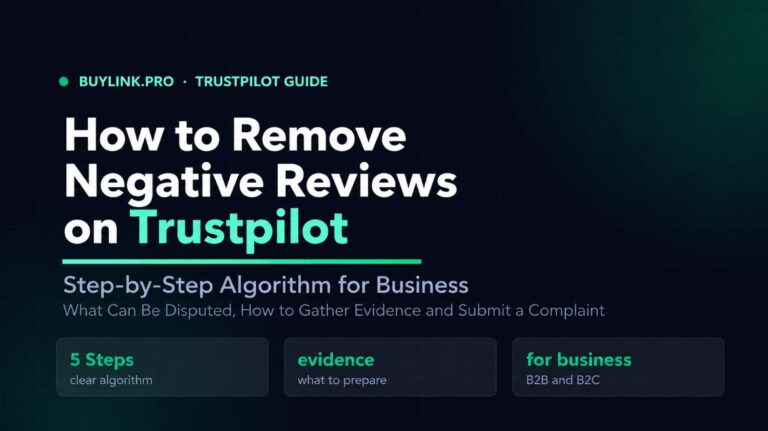

Among the huge number of online platforms where people post reviews on the topic of what they bought or ordered, where they went, the Trustpilot empire occupies a central place. The Danish platform has been acting as a platform for users from all over the world since 2006. They inform about products, services, catering outlets, salons, services, etc. It has a fairly wide coverage - it operates in more than a hundred countries, which is not surprising at all. For many institutions and companies, getting a positive rating and high marks there is a great honor, one might even say, a privilege. Users will be 100% sure where to make profitable purchases, look for responsible performers, and will not be deceived with the terms of cooperation.
Trustpilot is considered an exemplary service in terms of writing feedback also because they have quite strict requirements. Each comment is moderated, and the marking of undesirable reviews is welcome, which eliminates the machinations of competitors and the gratuitous downgrade. Everything is fair, transparent and objective. In addition, the response is indexed by search engines, and this is an impressive advantage both for increasing sales and for promoting a new product (relevant for yesterday's startups). The brand gets a quality mark, it is recommended, and overall things are going very well.
However, clouds periodically appear on the horizon. There comes a day in the Trustpilot profile when the company receives a negative response from a buyer or customer. Such comments can significantly damage the brand's reputation, which leads to bad consequences, and sometimes even quite deplorable. Since the platform has a strict policy, it is necessary to be able to work with reviews correctly in order to rectify the situation. If you don't have enough time and resources for self-management, you should follow the link to Trustpilot reputation management, get acquainted with the agency's offers and attract experienced webmasters. Experts know legal methods to increase reputation and manage comments so that the site comes out on top in the top 10 search results. Very little is needed from you - a determined attitude towards a positive result.
Trustpilot: the locomotive of the modern market
As mentioned earlier, Trustpilot is successfully operating around the world. Previously, it had one headquarters in Copenhagen. However, offices are now open in other major cities - London, Melbourne, Amsterdam, New York, Milan. Since you have already gained an idea of the external facade of the platform, it is worth asking about the main principles and policies.
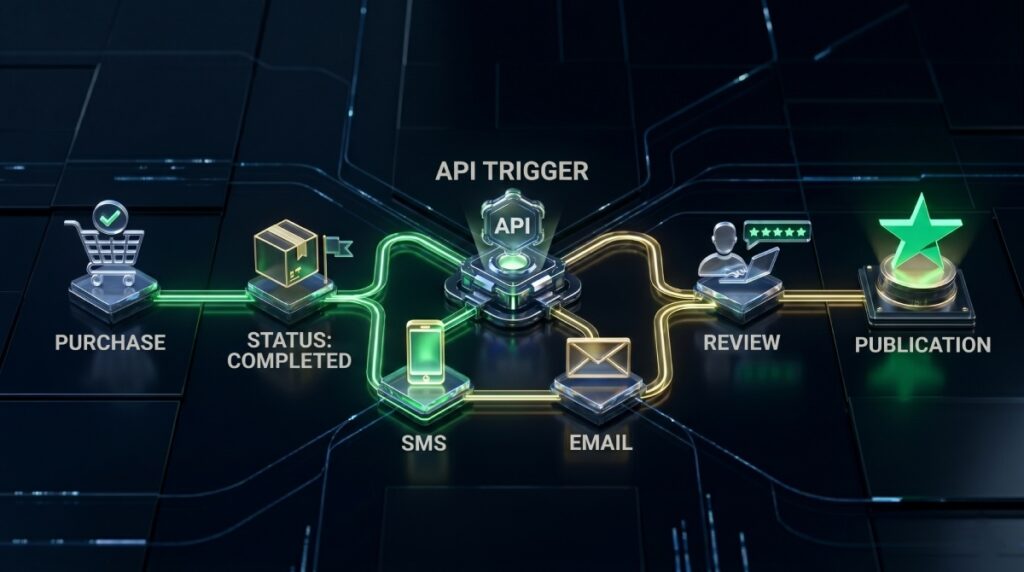
The key function of Trustpilot is to collect a huge number of reviews. Moreover, the business owner does not necessarily have to ask the client to write a comment about the quality of the product, the level of service or other points. Everything is quite easy and simple to set up automatically, e-mail, SMS messages and API are involved, but not immediately, so as not to put pressure on the user, but after receiving the "Completed" status. You can, of course, apply other methods, creative and modern, just to get a cherished comment.
To track their own success, the brand registers a personal account where progress is recorded. There you can see how many reviews have been written, what rating has been assigned to the company. As a result, the average score is set, which then determines the basis of the rating. The main thing is that the page is constantly updated with fresh responses. There may not be many of them, but stability plays a primary role here.
Among other things, business owners like double moderation on Trustpilot, which helps to avoid global mistakes and filter out unreliable and unwanted comments that can harm the company's activities. Each review must be checked, and in several stages - using specially developed algorithms (with the introduction of artificial intelligence technologies), then manually by managers. At one time, the site conducted research. According to the research, 3,300,000 fake comments were deleted in 2023 alone, and in 2024 the figure increased significantly to 4,500,000 rejected reviews. These figures inspire confidence, no doubt.
Trustpilot also works great in integration with other services, which greatly improves the effectiveness of brand evaluation and supports rating. We are talking about such digital giants as Google Seller Ratings for advertising, Shopify, Magento, WooCommerce, CRM systems for collecting reviews and working with them.
Trustpilot is absolutely necessary for three reasons:
- increase trust among buyers/customers and owners of other companies with whom it would be possible to establish a collaboration in the future;
- expanding the customer base - visitors perceive the feedback from other users as an authoritative source, and it often becomes a decisive factor in choosing;
- presence in the search engine - Trustpilot ensures constant organic traffic, as Google takes feedback for ranking, resulting in leading positions in search results.
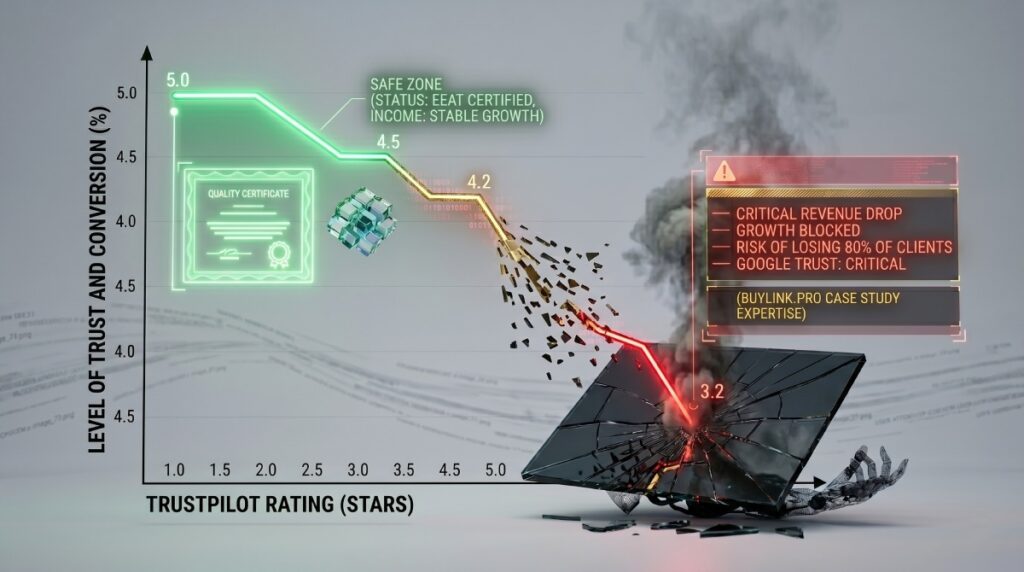
Everything sounds beautiful in words, but the comments are not always appreciative. Users who remain dissatisfied with a low-quality product or poorly performed service may also give a one or two star rating, which will cause the rating to fluctuate between 3.5 and 4.5, and this indicator is no longer considered high. The brands' request is definite: for confident development, a score of at least 4.5 is required. It is comfortable to perceive (research has been conducted on this topic several times), and reflects the true state of affairs.
How can I work with reviews competently to increase my rating and not get black marks from the platform? The issue is multifaceted, there is something to sort out.
The impact of negative comments on user behavior
Without reviews, it is impossible to run any business, even if it is growing tulip bulbs for sale. Comments are a kind of fuel, a brand is a locomotive, and reviews help it move forward. The user will first study all the reviews available on the Internet about gardening stores, and will begin to act in this direction. If he doesn't like something, he won't make the purchase. They liked the feedback, there are no complaints or suspicions - they will become a new client, probably they will recommend it to friends and acquaintances.
In addition, reviews trigger healthy competition, helping companies become better. In modern realities, competent ORM (Online Reputation Management) becomes the foundation for the expansion of the target audience and protection against information attacks.
Everything that is written above concerns not only positive comments. Negative ones also have an effect, and it is much stronger. No, this does not mean one continuous stream of claims and curses. Constructive criticism is very useful.
Almost everyone has encountered a situation where a long-awaited order did not arrive to the recipient on time, or the "expectation/reality" meme came to life, and the contents of the box do not meet the stated requirements. Such missteps happen even with large companies, but you can not let this happen, because one or two responses can significantly reduce the assessment and weaken the position of the company in its niche. It is especially alarming when the same mistakes are traced over a long period of time. Then not very good thoughts appear in the mind of a potential buyer / customer: aha, so there was such a problem, but it did not solve in any way, nothing changes at all. I don't think I want to order anything here, it's more expensive for myself...
With poor responses and low scores, Google's attitude is also changing. The search engine, having received a request from a user, collects data from the entire network. Of course, Trustpilot, as an authoritative web resource, is studied almost in the very first seconds. What happens in the end: there is practically no organic graph. There are great risks of ending up somewhere on the third page (at best) of the search results.
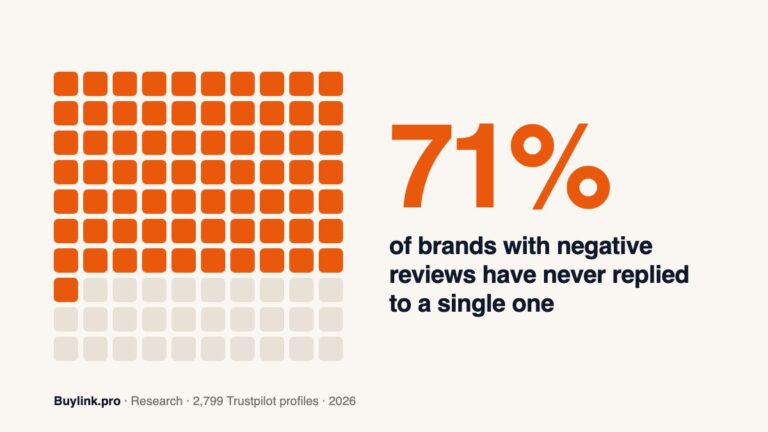
Visitors are particularly alarmed by abusive reviews, to which the company has not responded in any way. Experts say that every response must be answered, otherwise the buyer will have suspicions about fraud. Again, a bad picture is forming in my mind: that is, the brand doesn't care at all what happens, there is no reaction, and it is unlikely that there will be one at all. Then why waste time and money?
How ignoring turns out for business:
- conversion rates are rapidly decreasing;
- the number of responses, visits, and specific actions is decreasing;
- distrust from old and new customers.
Search engines will still not recommend the site to users. They perceive it as an unreliable source.
Negative feedback for businesses
Even if there is a desire to create a collaboration in the future, with a low rating it is not that difficult, it is simply impossible. It's rare for anyone to want to deal with a brand with a controversial reputation. There will be no profit from such a partnership, no attraction of new customers, or any other profit.
Another significant disadvantage is the distortion of the real image. People will be indifferent to previous achievements; they are concerned about the current state of affairs, and everything is very bad there. Buyers and customers won't come.
Of course, not everything is as gloomy as it might seem at first glance, and everything can be fixed. The main thing is to be motivated and use honest methods.

What to do if you receive a negative review on Trustpilot
Getting a negative comment about your brand (it doesn't matter if it's big or small) is unpleasant, insulting, and sometimes even unfair. Especially the owners of newly established companies are in a bad mood.
First, you need to calm down and pull yourself together. There will always be someone who is dissatisfied; it also does not happen that the service is 100% perfect. There may be flaws, this is influenced by various factors, often beyond the control of the businessman. Emotions only make the situation worse.
It is necessary to remember once and for all that it is quite possible to turn a negative review into a useful tool. To do this, it is necessary to analyze the mistakes made, what exactly went wrong: for example, there are complaints about the quality of the services provided (the specialist did his job carelessly) or the products sold. Maybe the service didn't suit you. If negative comments start to be indexed and spoil the overall picture in search, it is worth connecting SERM tools to technically competently shift the focus to the positive aspects of your activities.
In addition, a negative comment helps to build communication with a dissatisfied customer and better understand them. Contacting a customer who didn't like the coffee from a popular cafe in the city will be a signal to users: they are responsible here, which means they care. You can come and enjoy a fragrant drink without fear.
It is worth summarizing the block with one more positive point: companies that publish only positive comments everywhere do not inspire confidence either from potential buyers or from search engines. A balance is appreciated here: problematic points are also presented, that is, the brand does not hide anything.
How to respond to negative feedback correctly to improve your rating
The response to an angry response should be carefully thought out so that each side is satisfied. Experts have compiled a few simple rules to help resolve the situation and not lose your reputation.
- Do not show aggression. Even if the owner categorically disagrees with the comment, believes that its contents do not correspond to the ideas, it's just that the client did not like something - it is necessary to show friendliness and courtesy. Aggression and attempts to prove their truth will only lead the conflict even further.
- Demonstrate sincerity. There should be regret in the answer: there was a mistake, no one denies this fact, it's a pity that it happened that way. The client understands that no one is missing his problem.
- Don't try to hide the truth. No one likes perfect pictures: they seem cloying, and you just want to find some kind of trick. If there are flaws, then let them be in plain sight.
- Do not exaggerate emotions. Empathy, empathy, acceptance of a problem - it's wonderful, it "humanizes" the company. However, there is no need to turn what happened into a tragedy. For a customer who is dissatisfied with the quality of goods or services, a specific solution to the problem is more important than playing theater.
There must be a balance in everything.

Marking a negative review as undesirable: does it help
Trustpilot has such a useful option as tagging an unwanted comment. You need to be able to use it correctly to manage your reputation and maintain a high rating.
What cases does this apply to?
- Feedback from competitors. As a good example, we can consider this case: the review says that croissants from the "A" store are bad, it is impossible to eat them, they taste like cotton wool, and the price for tiny pastries is overestimated many times. Is it point "B", where the pastries are airy and cheaper, and tea is also included! Additionally, a link is unobtrusively attached...
- Spam. The commentary doesn't say anything productive, but the crowning achievement is a one- or two-star rating. It doesn't work out well: there are no complaints as such, but a low score significantly spoils the rating, which has been building for months, if not years.
- Publicizing the personal data of the company's employees. It is strictly forbidden to publish the full names of specialists, phone numbers, places of residence and other information that could harm confidentiality.
- Unreliability. It is already clear that comments containing specifics are valuable. Using the example of a hand tool store: the user wrote that he had purchased pliers at that time, and that was when he received a package from the store, but the handle of the tool turned out to be damaged. There are details, and the essence of the claim is clear. But if it's just stated in a couple of sentences, "they gave me damaged pliers, I don't advise anyone to contact and buy something there," most likely, the review was ordered, there is no benefit from it.
By the way, the latter case is considered the most trouble-free in all areas. It is much easier to regain a good name and an excellent reputation: to begin with, it is enough to communicate with the buyer / customer in personal correspondence regarding the details. You need to ask for a receipt that confirms the purchase and payment, specify exactly when the events occurred, and check the customer base. Based on the information received, it is possible to build a strategy for correcting errors. As a last resort, mark the review as undesirable.
It is important to add: after the problem is fixed, when everything is fine and the client has calmed down, he will write another comment with an explanation and change the rating. This will have a positive impact on the rating.
Additional tips for dealing with negative reviews
When working on abusive responses, every detail matters. Therefore, it is recommended to take into account the following aspects:
- Choose the right time to respond - do not contact the client immediately: emotions are still fresh; another gross mistake: remember about the client after a couple of weeks or months, when the problem has dulled; the most optimal interval is from a couple of hours, two days are allowed for waiting, but this maximum;
- Apply personalization - you can, of course, develop a single template for writing responses, but it would be good, for example, to address the user by name to demonstrate concern or add an order or purchase code.;
- Offering different solutions to a problem is a logical way to demonstrate the brand's commitment and loyalty to the user; there are various ways to resolve the conflict and apologize, and it also helps to ask the customer's opinion; if the outcome is favorable, the rating will rise.
All negative comments should be recorded and documented. This will help to identify system errors and carry out painstaking work on their correction.
Is it possible to buy reviews for Trustpilot to improve the rating
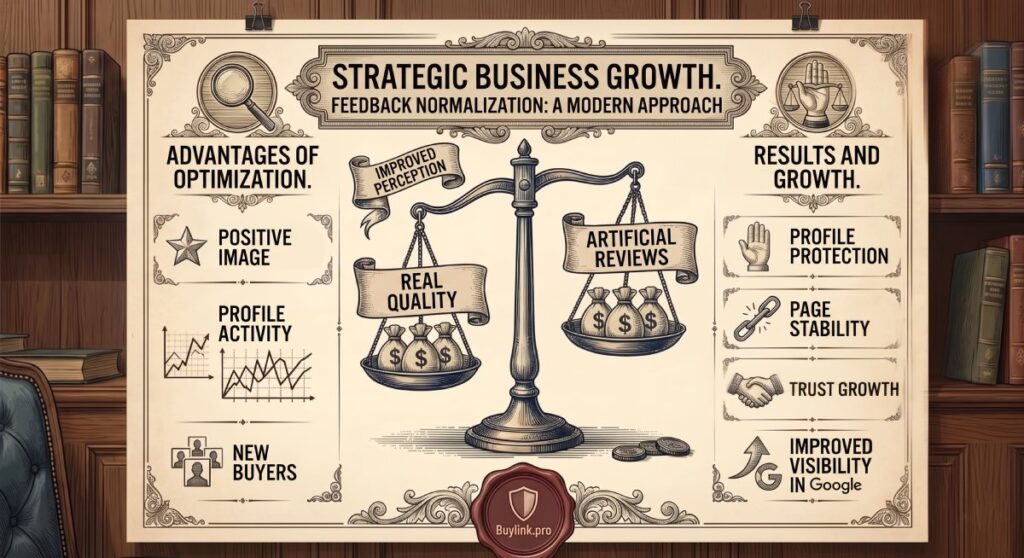
Trustpilot is a reputable platform, and having a high rating there is equivalent to a tremendous success in the field (like winning a million dollars in the lottery). Realizing the prestige of having thank-you reviews there, brands often wonder about purchasing reviews. You just need to set stricter requirements for comment authors, and everything will be fine. However, this is a pretty serious step, and you should think about it before deciding on it.
One aspect should be remembered: Trustpilot accepts only those comments that comply with their policy, and the most important principle is the user experience. In other words, the author of the response should have actually ordered the delivery of a tracksuit, bought a gift set, or called a plumber to fix a leak in the kitchen in reality.
Among other things, there are other factors:
- the formulations that the user uses to write a response about the product;
- activity - how often the platform is visited by a specific person;
- time - when was the last time a user visited the page at all;
- grades - what he mostly puts on.
What else should you definitely pay attention to? Although this has been repeated several times, it is better to mention it once again - it is impossible for the company to have only positive feedback. It looks suspicious, especially if they are being left from newly registered accounts.
Are there any risks? Of course, they are significant. Purchased reviews can level the situation for a while, but then everything will roll back, if it doesn't get worse.
What could be the consequences of this? Not the best, to be honest and honest. After purchasing the comments, there are even thoughts that it would be wiser to work on the existing responses in due course, to solve problems with the quality of products and services.
What is it about?
- Deleting responses. That is, if the algorithms understand that the reviews are not real, but purchased, they are deleted without any warning. In addition, sanctions are imposed on the company's page itself, which can significantly damage their activities. The level of trust among users is also rapidly falling.
- Reputation problems. If the comments are written as a carbon copy, it is noticeable to the naked eye. A potential client develops a logical chain: something is wrong with the responses, they are probably buying, so you definitely shouldn't contact them, you don't really want to suffer later. Therefore, the business will remain without a potential buyer or customer.
- Difficulties with online presence. Purchased reviews degrade the brand's visibility in search engines.
What are the conclusions from the above information?
A negative review of a company's products or services is not an apocalypse; it is unpleasant, of course, but it is possible and necessary to work with it. The main thing is to be able to properly evaluate criticism, choose the right time for communication, so that the owner's emotions subside and the client is ready to communicate normally, in fact. Tracking comments and building communication are the best strategies for improving ratings, and negative feedback will be the last thing to see.