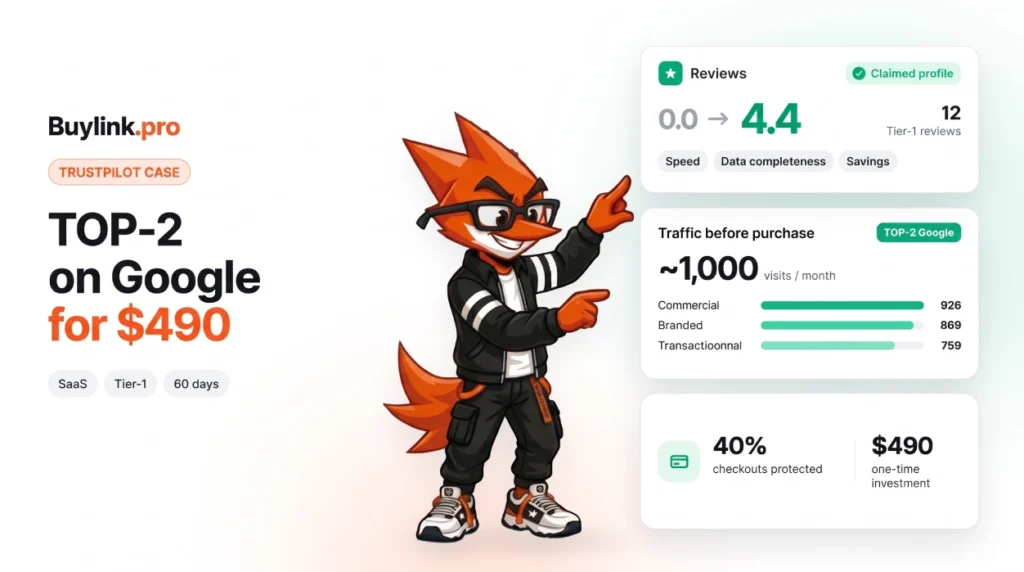
60 days | Investments: $490 | 12 Tier-1 reviews | Rating 0.0 → 4.4 | TOP-2 in Google and ~1,000 visits/mo
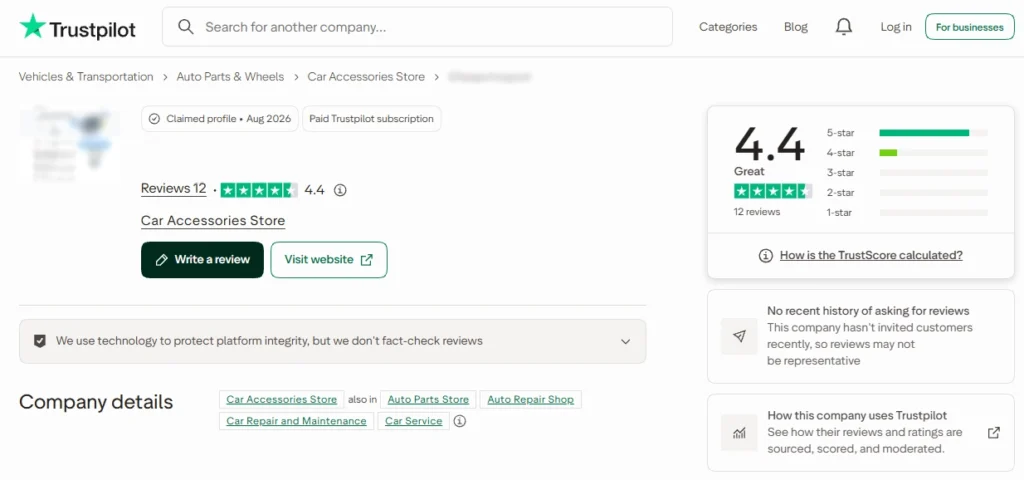
How Buylink.pro closed a critical vulnerability at the checkout stage for an American SaaS service, brought the Trustpilot profile to the TOP of branded search results, and proved that managed reputation is the best insurance against abandoned carts.
Client and problem: Why do users leave right before payment?
Inputs:
- Niche: SaaS provider of verification and analytical data.
- Region: Tier-1(US).
- Period: May - June 2026.
- Result: Profile with a 4.4 rating, reaching TOP-2 of branded Google search results, and ~1,000 targeted visits per month.
Situation: The platform operates in the highly competitive North American market, providing users with instant analytical and verification reports. Marketing successfully attracts targeted traffic to the website, users select the needed package, proceed to the payment window, but more than 40% of hot leads interrupt the session directly at the stage of entering payment data.
What the problem was: The specifics of the digital reports niche in the US are associated with a large number of phishing sites and services with hidden auto-debits. The American audience is maximally cautious: before linking a card on a new site, the user opens an adjacent Google tab and conducts a quick brand check.
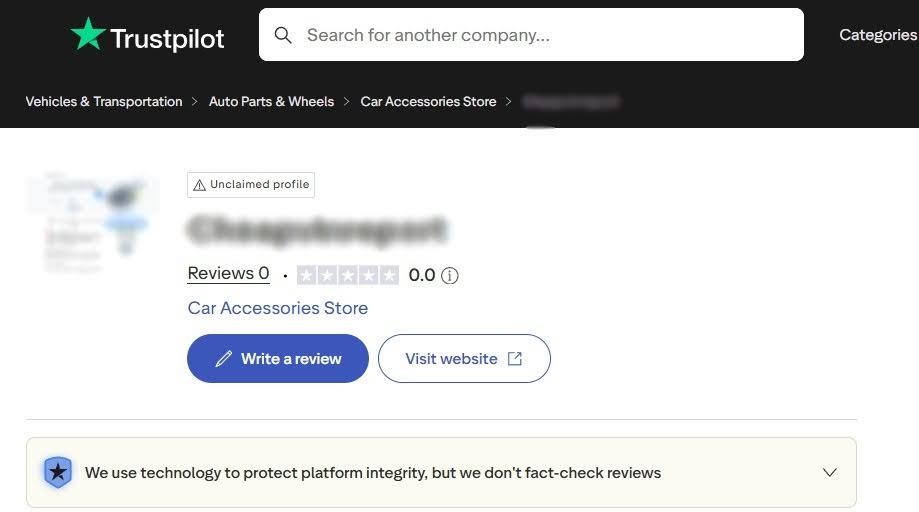
At the start of work, the company's profile on Trustpilot was empty: Unclaimed profile status, 0 reviews, and a 0.0 rating. The lack of independent social proof at the moment of payment caused distrust - clients did not want to risk their card data and left for more expensive, but proven competitors.
How Buylink.pro developed a strategy
Instead of compensating for the outflow of buyers by increasing the advertising budget, we focused on retaining users who had already reached the checkout:
- Natural distribution of ratings: In the US and Canadian markets, a sterile 5.0 rating often raises suspicions among buyers. We built a transparent process of collecting feedback from real clients after purchase, without trying to artificially filter out 4-star ratings. As a result, a live balance was formed, which brought the profile to the maximally credible indicator of 4.4.
- Survey matrix with a focus on removing objections: We analyzed what exactly stops a buyer before a transaction, and adjusted the mechanics of requesting reviews from existing clients from the US. Instead of general phrases, we asked users to share specific experience across three main triggers: report delivery speed after payment, data completeness, and direct financial benefit compared to market monopolists.
What was done in 60 days
At the start, we faced the task of filling the profile from scratch with relevant user experience and passing the strict algorithms of Trustpilot's anti-fraud protection.
- Period of work: May - June 2026.
- Profile verification: Official business account status (Claimed profile) was registered, company cards and details were filled out.
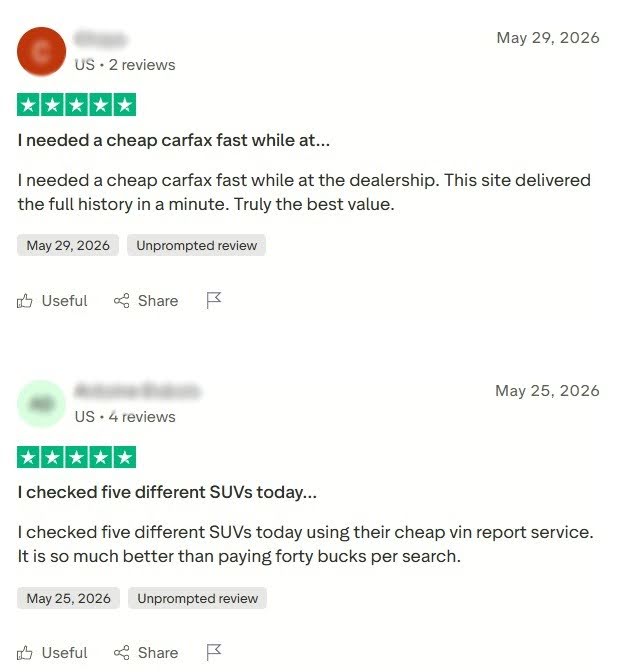
- Volume and geography: 12 detailed reviews were published with strict localization for the US market (profiles with history and US geolocation).
- Usage scenarios: Each review described a real-life situation in which the service helped save time and money right at the place of the deal.
- Safe dynamics: Publications were distributed smoothly over two months using an isolated network infrastructure. This ensured a 100% survival rate of reviews and passing the platform's spam filters without a single removal.
- Result: The platform's rating grew from 0.0 to 4.4 with an investment of $490.
SEO effect and funnel protection
The boosted profile on Trustpilot instantly changed the structure of search results for the brand name and became the main conversion lever:
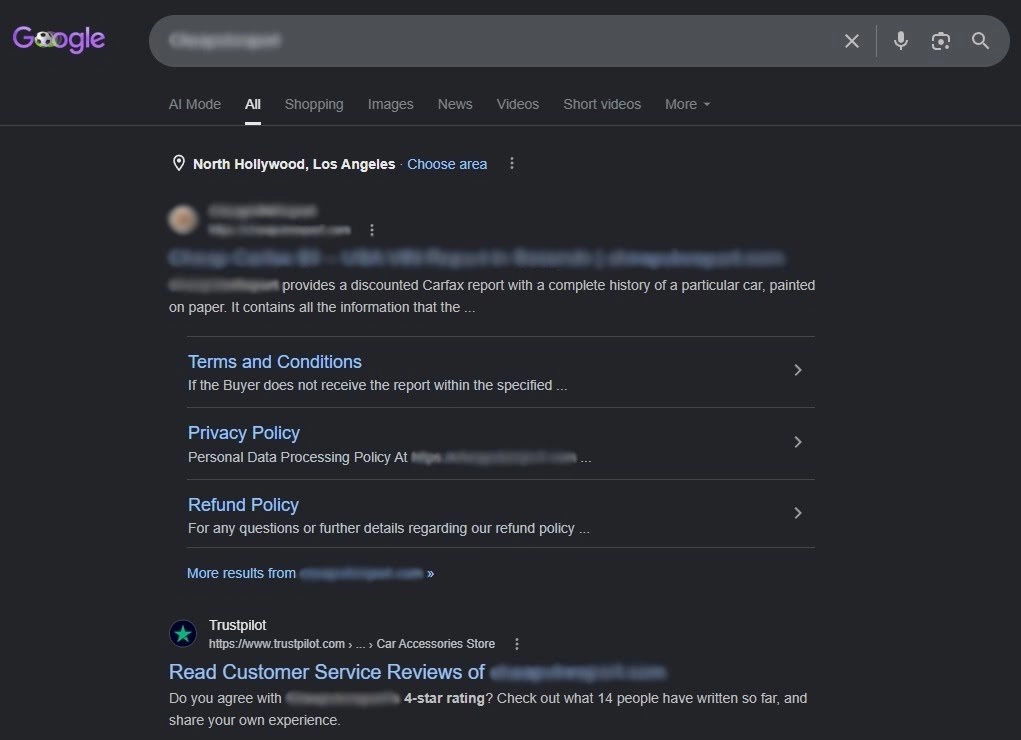
- Capturing TOP-2 in Google: Thanks to the high authority of the Trustpilot domain and regular content updates, the page with reviews consolidated on the second line of organic Google search results.
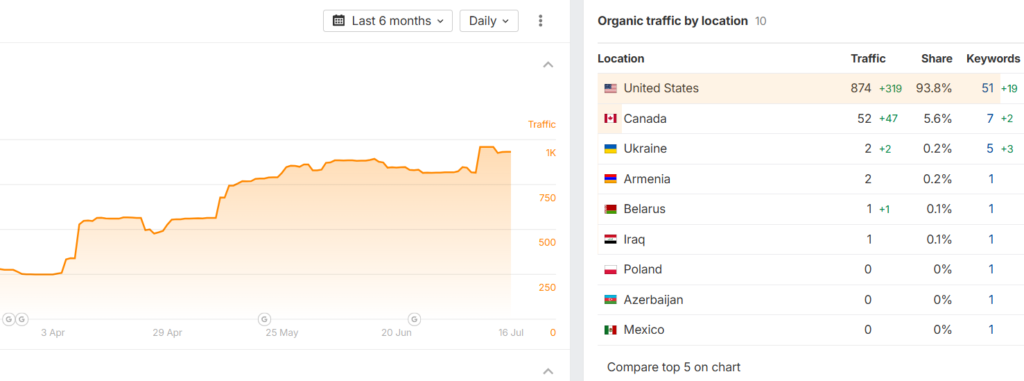
- Organic traffic growth to ~1,000 visits per month: According to analytics, the page began generating a stable flow of visits from users checking the company before buying.
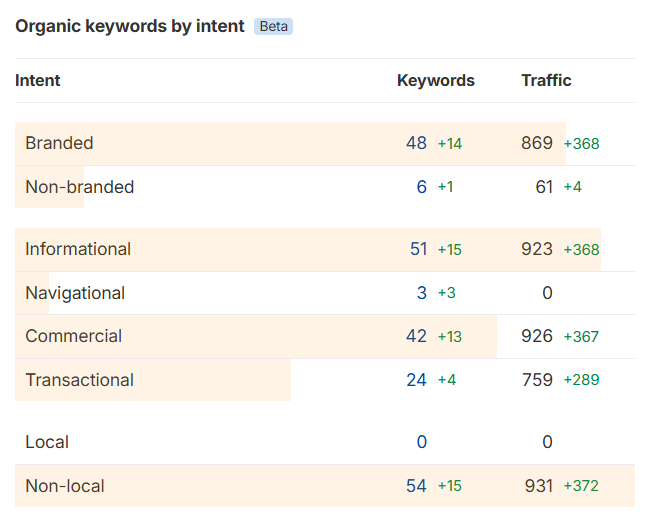
- Interception of transactional demand: The semantic slice showed that users find the page by the hottest queries with high readiness to pay: Branded (869 visits), Commercial (926), and Transactional (759). Seeing the 4.4 rating right in the Google snippet, the client returns to the cart and calmly completes the payment.
Project economics and payback
The mathematics of the case study clearly shows why basic reputation packaging pays off faster than any investments in direct advertising:
- Investments in the profile: $490 (turnkey package of 10+ Tier-1 reviews).
- Cost of inaction: Losing more than 40% of buyers at the checkout stage, the business inefficiently spent almost half of its marketing budget on traffic acquisition.
- Business result: A one-time investment of $490 created a conversion asset that monthly takes on about 1000 verification queries from the US and Canada. By eliminating the barrier of distrust before payment, the company stopped the outflow of leads from checkout and restored the profitability of paid traffic.
For whom Trustpilot Marketing works best
- For whom it is ideal: SaaS platforms, data verification and checking services, FinTech, E-commerce, and digital products in the US, Canadian, and EU markets. Projects where the user makes a payment decision online and обязательно checks the reliability of the site before entering card data.
- When we DO NOT recommend this channel: If the payment process itself is not technically debugged on the site (acquiring fails) or the product does not fulfill the stated promise after payment - in this case, real negativity will quickly overlap the created foundation.
Evaluate the real losses of your funnel at the review verification stage
If your analytics show a high bounce rate at the cart or payment window stage - the problem may not be in the price or the interface. Buyers simply go to google reviews about your brand and find no confirmation of your reliability.
Leave a request for an audit and get a Trustpilot Opportunity Map for your project.
As part of the audit we will:
- Evaluate the current state of your branded Google search results in target Tier-1 markets.
- Show through the eyes of a buyer what stop-factors prevent your leads from completing a transaction.
- Develop a matrix of scenarios for natively addressing the main fears of your audience (payment security, speed, service quality).
- Calculate the exact economics and a safe schedule for bringing your profile to target indicators (4.0+).