Fake reviews come down when the violation is proven
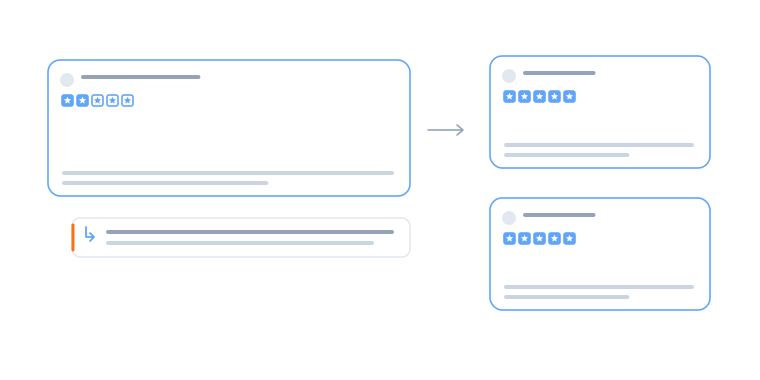
We find reviews that break Trustpilot's guidelines, collect the evidence, file the report under the right rule and follow it until Trustpilot decides. Honest negative reviews stay, and we tell you that upfront.
There is no button that deletes a review, and no agency has one. A business flags a review from its Trustpilot Business account and names the guideline it breaks. Trustpilot's content team checks the report and either removes the review or leaves it up. So the whole job is to choose the right reviews, prove the violation and keep the report moving.
Removal cannot be bought from Trustpilot, and a paid plan does not change moderation. A service that "guarantees removal" is promising a decision it does not make.
A moderator compares the review with one specific guideline. For some reasons Trustpilot asks the reviewer to show proof of a genuine experience; if the proof does not come, the review comes down.
We sort the reviews, cross-check them with your order data, prepare the wording and evidence, file from your account and follow up. You see every report and every decision.
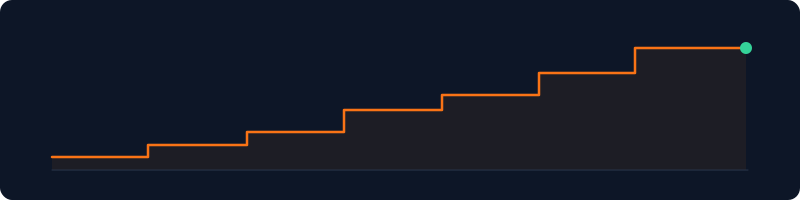
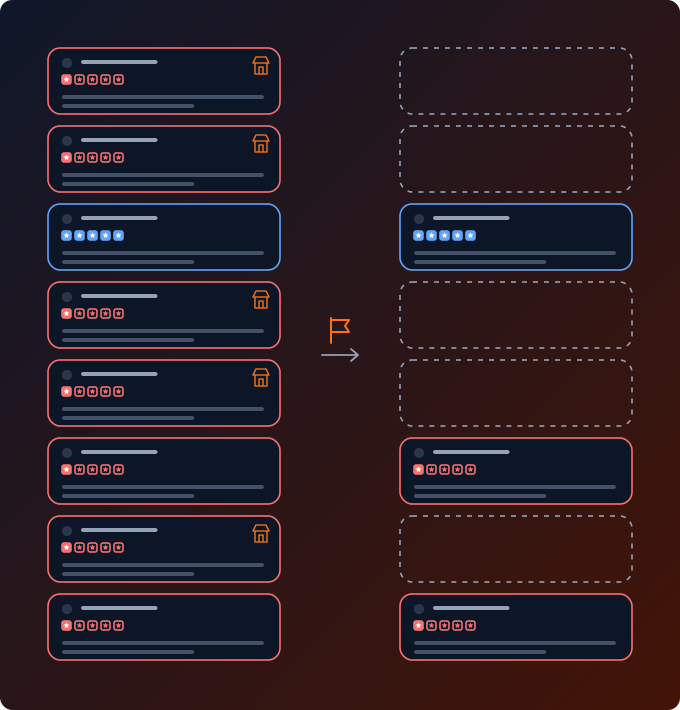
When a company comes to us with a list of reviews it wants removed, about 7 in 10 of them turn out to break Trustpilot's guidelines: competitors, people who confuse you with another business, coordinated attacks, reviews with no real purchase behind them. These are exactly the reviews Trustpilot takes down when the violation is proven, and on average they do come down. The remaining reviews are usually from genuine customers: for those we write replies and build a flow of new reviews instead of filing reports that will fail.
These are the situations where Trustpilot's guidelines give a real reason to take a review down. For each one, here is what it looks like on a profile and what evidence makes the report work.
The author never bought from you, describes a product you do not sell or confuses you with a company with a similar name. This is the most common ground and the one that works best.
A review from a competitor, its employees or your former employees. Under Trustpilot's rules this is not a customer experience, whatever the stars say.
Names of your staff with contact details, phone numbers, emails, addresses, order or document numbers. Trustpilot takes such content down without arguing about the substance of the review.
Threats, hate speech, discrimination, obscene language, or an accusation of a crime presented as fact without any basis. A harsh tone or "worst company ever" is not enough on its own.
Links to other sites, "go to X instead", promotion of a competitor, the same text posted from several accounts or on several company pages.
A burst of 1-star reviews from new accounts within days, often after a public conflict, a news story or brand confusion. Separate reports get lost; one well-documented report does not.
A short overview of these rules, together with how TrustScore is calculated, is also on our Trustpilot reputation management page. This page goes deeper into the removal work itself.
If most of your negative reviews are genuine, removal is the wrong tool. What helps then is a calm public reply and a steady flow of reviews from satisfied customers. That is our Trustpilot reputation management service, and our guide on how to respond to a bad Trustpilot review has ready templates.
Flagging is free and open to every business. Most reports still fail, and almost always for the same five reasons.
"This is not true" is an opinion. A moderator needs a guideline and a fact, such as no order under this email.
A review about another company flagged as "harmful" gets rejected, while the same review flagged as not a genuine experience often comes down.
Flagging every negative review looks like an attempt to hide criticism. Trustpilot can limit a business that misuses flagging, and real violations get lost in the noise.
After a rejection most companies stop. Often the review can be reported again with new evidence or under a more accurate guideline.
Twenty separate reports about twenty similar reviews are weaker than one report that shows the pattern.
Want to try it yourself first? Our free guide on how to remove negative reviews on Trustpilot walks through the report step by step, and there is a report template in our Trustpilot tools.
Five steps, from the first look at your profile to the report on decisions. The first reports usually go out within a week.
You send the profile link and the reviews that worry you. We sort every review into three groups: clear violation, possible violation, genuine feedback. You get the list with reasons and our estimate of how many will come down, before any reports are filed.
We cross-check reviewers with your orders and tickets, collect screenshots, find the company the review is really about, and build a table for a coordinated attack. We only ask you for what is needed.
Each review is flagged from your Trustpilot Business account under one precise guideline, with a short factual explanation. No mass flagging.
We track every report. After a rejection we check whether there is new evidence or a more accurate guideline and file again; if there is not, we say so and stop.
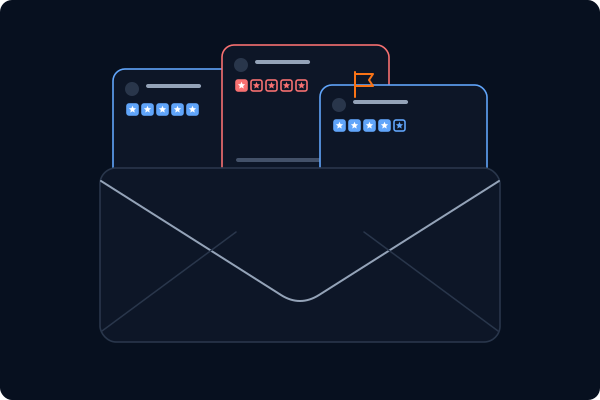
Which reviews came down, which stayed and why, how the TrustScore moved. For reviews that stay, we suggest replies and a plan for new reviews from real customers.
A user in your Trustpilot Business account (the free plan is enough for reports) and a way to check customers by name, email or order number. We sign an NDA if you need one.
A licensed online casino in the EU lost registrations because its Trustpilot rating fell to 1.6. The reviews were real complaints, but about a different, closed offshore project with a similar name.
We separated the reviews that described incidents impossible on the client's platform (stolen crypto, unpaid winnings on another site), collected the evidence and reported each one under "about a different business". We did not buy reviews to bury the negative ones and did not file template complaints. Trustpilot's moderators confirmed the mistake and removed the reviews.
More results with numbers: all Trustpilot case studies.
Search for "remove Trustpilot reviews" and you will find offers with guarantees and pay-per-removal pricing. Before you pay anyone, including us, check how they plan to do it.
| Question | Safe approach | Red flag |
|---|---|---|
| Promise | An honest estimate of which reviews have grounds | "100% removal guaranteed" for any review |
| Method | Reports from your own business account under a named guideline | Secret contacts at Trustpilot, mass flagging, pressure on reviewers |
| Negative reviews | Genuine feedback stays and gets a reply | Burying negatives under bought or written 5-star reviews |
| Risk to you | None beyond the time spent | Consumer warning on the profile, removed reviews, a ban on flagging; in the UK, fines under the DMCC Act |
| Transparency | You see every report and every decision | "Leave it to us", no access to what was filed |
For the UK and the EU. Since 6 April 2025 the UK DMCC Act bans fake reviews, concealed incentives for reviews and hiding genuine negative reviews to mislead buyers. In the EU, similar rules come from the Omnibus Directive. Reporting reviews that break the platform's rules is the legal side of this line, and it is the only side we work on.
Review disputes are part of our Trustpilot packages, which start at $490. The price depends on three things:
We name the exact figure after the profile check, and only take on reviews that have a real chance. Package contents are on the Trustpilot pricing section.
Paste your Trustpilot profile link in the form and list the reviews that worry you. We reply with which ones have grounds for removal, which do not, and what it would cost.
Check my reviewsShort answers about removing reviews. For ongoing profile work see Trustpilot reputation management; to work out how many new reviews you need for a target score, use the TrustScore calculator.
No, and nobody honestly can. Only Trustpilot removes reviews, and only when they break its guidelines. What we can share is our track record: on average about 70% of the reviews clients ask us to remove come down, because most of them turn out to be from non-customers, competitors or coordinated attacks. We guarantee the work: a check of every review you send, evidence, a report under the right guideline and follow-ups until Trustpilot gives a decision.
Reviews that break Trustpilot's guidelines: written by someone who was never your customer or about a different business, posted by a competitor or by your own staff, containing personal data, abuse, threats or false accusations of a crime, advertising and spam, and reviews from a coordinated attack. Honest negative reviews from real customers are not removed.
We check the reviews and send the first reports within about a week. Trustpilot's decision on a single report usually takes from several days to a few weeks, longer if the reviewer is asked to prove their experience. A large batch takes longer: in our iGaming case, 20 reviews about a different business were removed over 70+ days.
Trustpilot packages that include review disputes start at $490. The price depends on how many reviews need a report and how much evidence has to be collected. We name the exact figure after we check the reviews you send.
Yes. Any business can flag a review for free through its Trustpilot Business account. Most self-filed reports fail because they argue that the review is unfair instead of naming a guideline and attaching proof. Our step-by-step guide and report template are free to use.
We look at the reason, add new evidence if it exists and file a follow-up. If the review really does not break the guidelines, we tell you so, reply to it on behalf of the company and work on invitations to real customers so it stops being the main thing a buyer sees.
Reports are filed from your own Trustpilot Business account, as Trustpilot requires. The reviewer is not told who flagged the review. If Trustpilot asks the reviewer to prove their experience, the request comes from Trustpilot.
Yes, when it means reporting reviews that break the platform's guidelines. Since April 2025 the UK DMCC Act bans fake reviews and concealed incentives for reviews, and it also bans hiding or suppressing genuine negative reviews. That is why we only report real violations and never ask to hide honest feedback.
Fill out the brief to receive a structured reputation roadmap focused on profile optimization, risk management, and long-term brand trust growth.