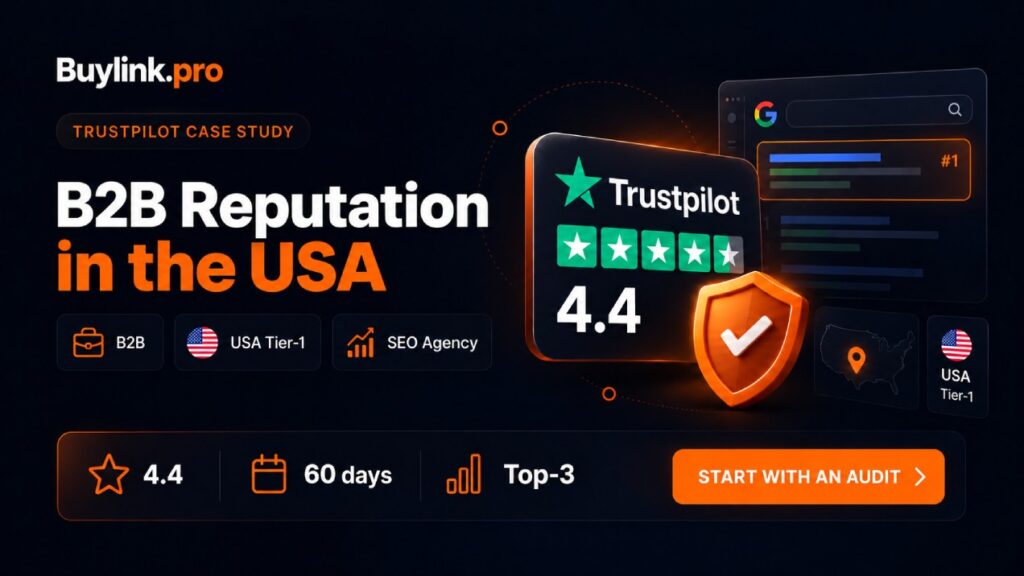
60 days | Investments: $490 | 10 B2B reviews | Rating 0 → 4.4 | Top-3 in Google
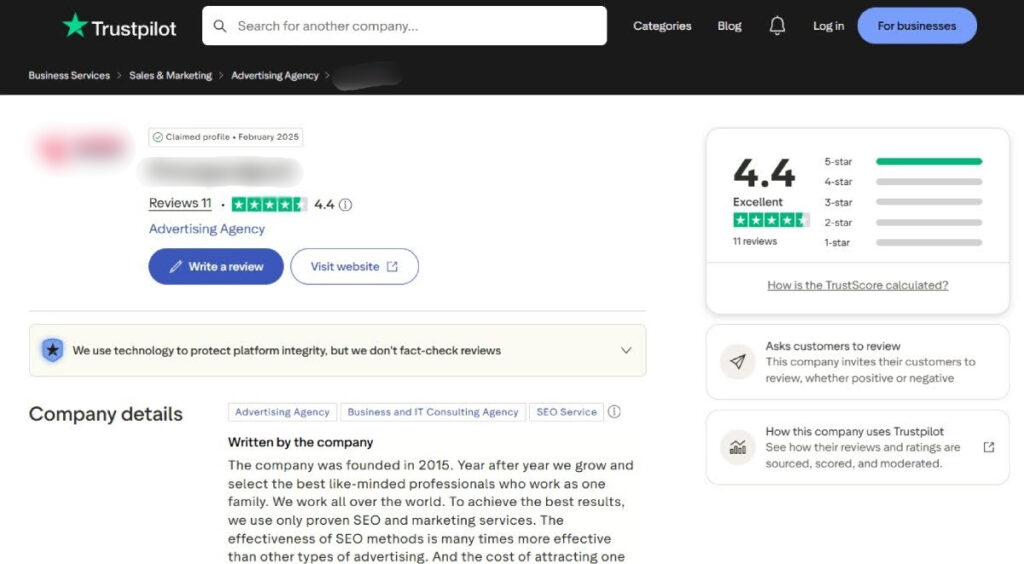
How Buylink.pro closed a critical vulnerability in a B2B provider's sales funnel, monopolized branded search results, and proved that reputation is insurance for the entire marketing budget.
Client and problem: Why exactly Trustpilot?
Inputs:
- Niche: SEO Agency.
- Region: Tier-1.
- Period: April-May 2026.
- Result: Profile with a 4.4 rating in 60 days, Top-3 in branded Google search results.
Situation: Start of aggressive expansion into North America. Marketing consistently generates traffic from Google Ads and LinkedIn, sales hold demo calls, but at the stage of closing high-ticket contracts, deals massively fall through. Decision-makers go to "think about it" and disappear.
What the problem was: We analyzed the path of the Western B2B client and identified a blind spot. Before signing a contract, the decision-maker strictly conducts Due Diligence (counterparty verification). He goes to Google and types "[Brand Name] reviews" or "Is [Brand Name] legit".
For the client, these search results were either absolutely empty or led to irrelevant technical pages. The deficit of external confirmation killed trust. We decided not to flood the funnel with new expensive traffic, but to "plug" the hole at the verification stage, where formed demand burned out due to the lack of social proof.
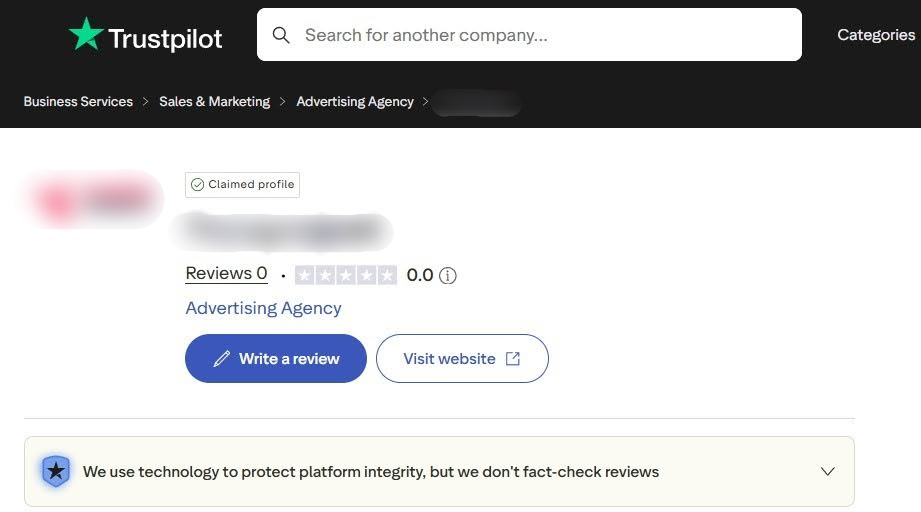
How Buylink.pro searched for a strategy
We did not engage in blind boosting. We built an architecture for overcoming objections based on the client's data:
- CRM rejection analysis: Found out why clients do not buy after a demo (main fears: complex integration, hidden payments, slow support).
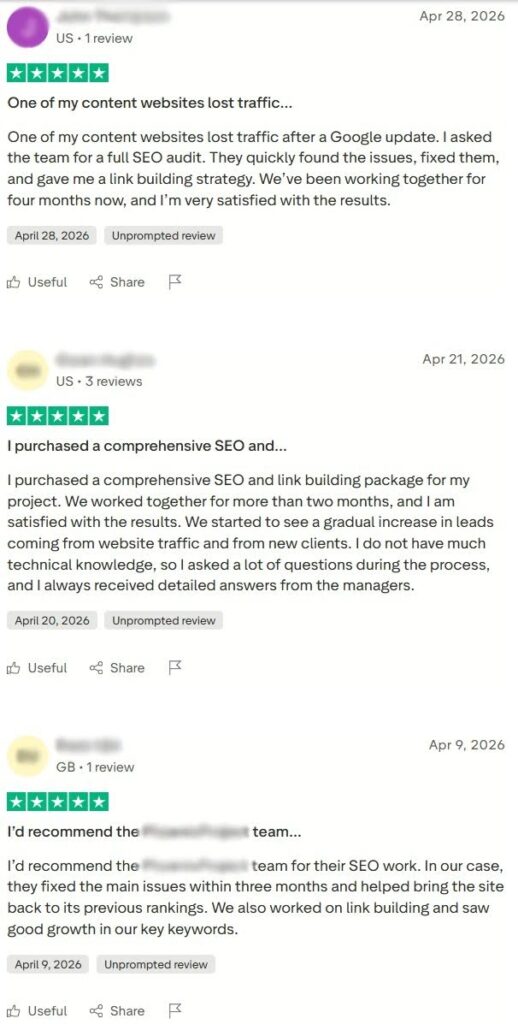
- Content matrix development: Wrote 10 narrow B2B scenarios. Each review was published on behalf of a founder or Head of IT and closed a specific pain point, acting as a mini-case study.
What was done in 60 days
So that Trustpilot would not mark the profile with a red badge (Consumer Warning), we implemented the Safe Growth protocol:
- Period of work: 60 days.
- Volume: 10 detailed expert reviews.
- Dynamics: Publication was distributed according to a schedule 100% imitating the natural closing of deals.
- Infrastructure: Only warmed-up accounts of the Tier-1 segment with a history of real reviews and isolated networks were used.
- Removed by moderation: 35%. We are absolutely honest: Trustpilot's AI algorithms are currently brutal, and the loss of a part of publications is a market reality. What is important is something else: we factor these risks into our unit economics and make replacements for free. The client received exactly 10 permanent assets without exceeding the $490 budget.
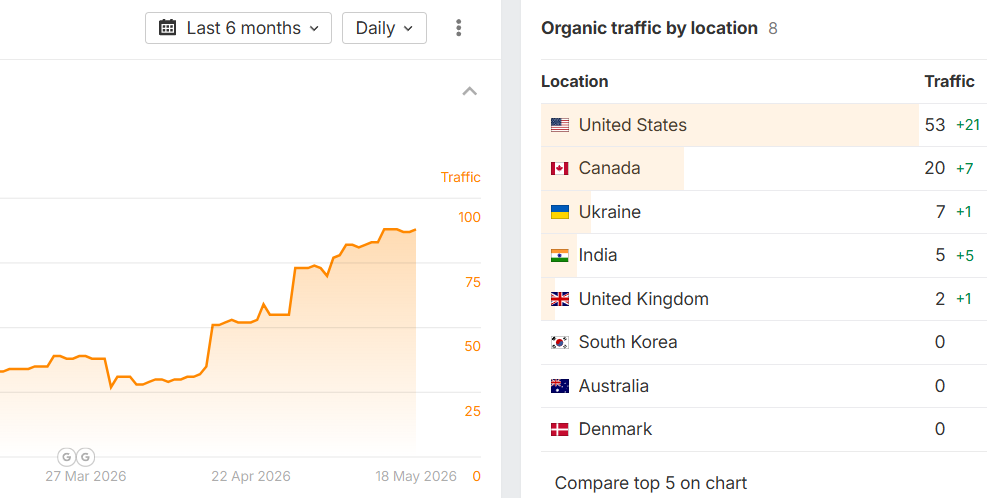
SEO effect and funnel protection
We didn't just get pretty stars, we captured the search space.
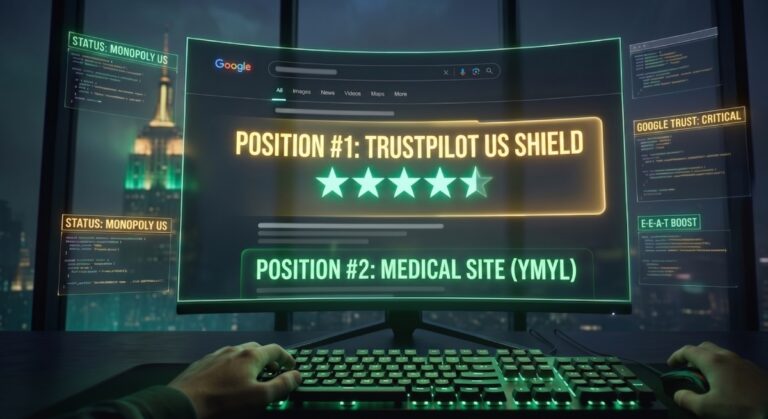
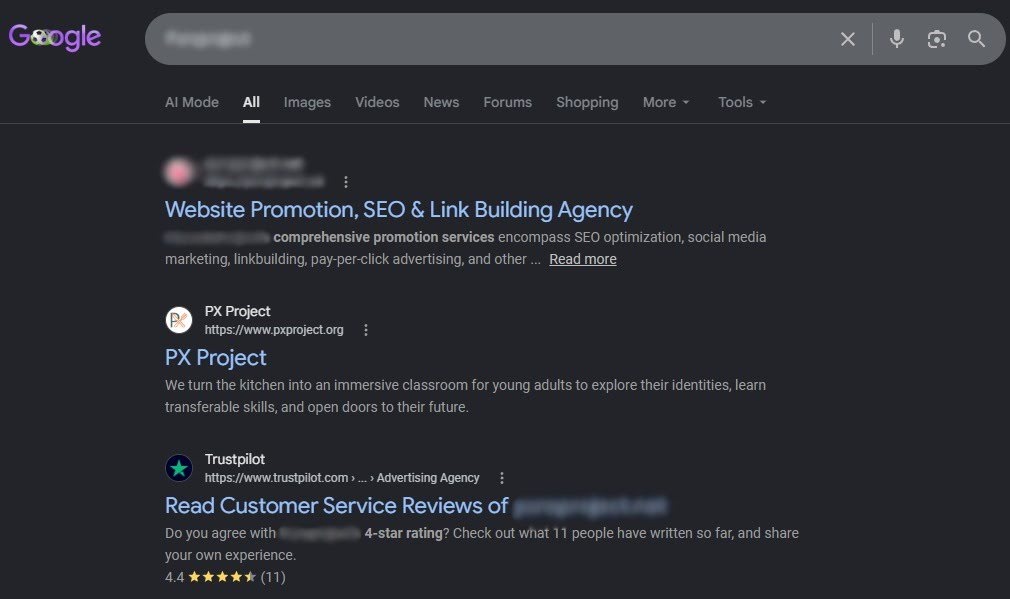
- Monopolization of search results: In a month, the Trustpilot page consolidated in the Top-3 of Google for targeted branded queries in the USA.
- Attribution and objection handling: When moving to the negotiation stage, clients began to refer to the profile themselves: "I saw on Trustpilot that your support answers in 15 minutes, is that true?".
- Presale protection: The independent 4.4 rating began to work as an automatic pre-qualifier. The decision-maker sees an authoritative profile before the first negotiations, which radically changes the tone of the deal.
Project economics
The case study shows its real value when we look at the math:
- Investments in the profile: $490.
- Cost per Asset: $49 for one undeletable B2B case on an independent platform.
- Business result: The $490 investment acted as direct insurance for the $2k+ advertising budget. The client stopped paying for expensive clicks in Google Ads in vain, as leads stopped dropping off at the final stage of reputation verification.
For whom Trustpilot Marketing works best
- For whom it is ideal: B2B SaaS, DevTools, FinTech, Cybersecurity, complex agency services, products with a complex selection cycle and high LTV. Companies entering Tier-1 markets, where the audience historically does not trust landing pages without external proofs.
- When we DO NOT recommend this channel: If you have a B2C mass market with a $5 check, low quality of the service itself, or a basic sales funnel is not built.
Evaluate the real losses of your funnel at the Due Diligence stage
If you invest in attracting Tier-1 traffic, but qualified leads regularly go to "think about it" after a demo - the problem is not in the product. You lose them at the counterparty reputation verification stage.
Submit an application for a technical audit and get a Trustpilot Opportunity Map for your business.
On the introductory synchronization we will:
- Evaluate the current state of your branded SERP results in the US and EU markets.
- Show through the eyes of a decision-maker how your current digital footprint affects decision-making.
- Form 3-5 B2B scenarios for the native handling of the main objections of your target audience.
- Calculate the unit economics and the budget of a safe pilot.